

Here's how to break in shoes without pain: check the fit before you wear them outside, start with 20 to 30 minute sessions at home, and add time gradually over about two weeks. Wear the socks you'll actually wear with the shoes, cover any hot spot the moment you feel it, and keep heat and water away from the leather. If a pair hurts badly from the first minute, the size is wrong, and breaking in won't fix it.
Key takeaways
- Breaking in softens stiffness. It can't fix shoes that are the wrong size or shape.
- Short indoor sessions, increased gradually over about two weeks, prevent most blisters.
- Stop at the first hot spot and protect it before your next session.
- Never use a hairdryer or direct heat on leather.
- Suede, nubuck and shoes with cushioned soles usually need little or no breaking in.
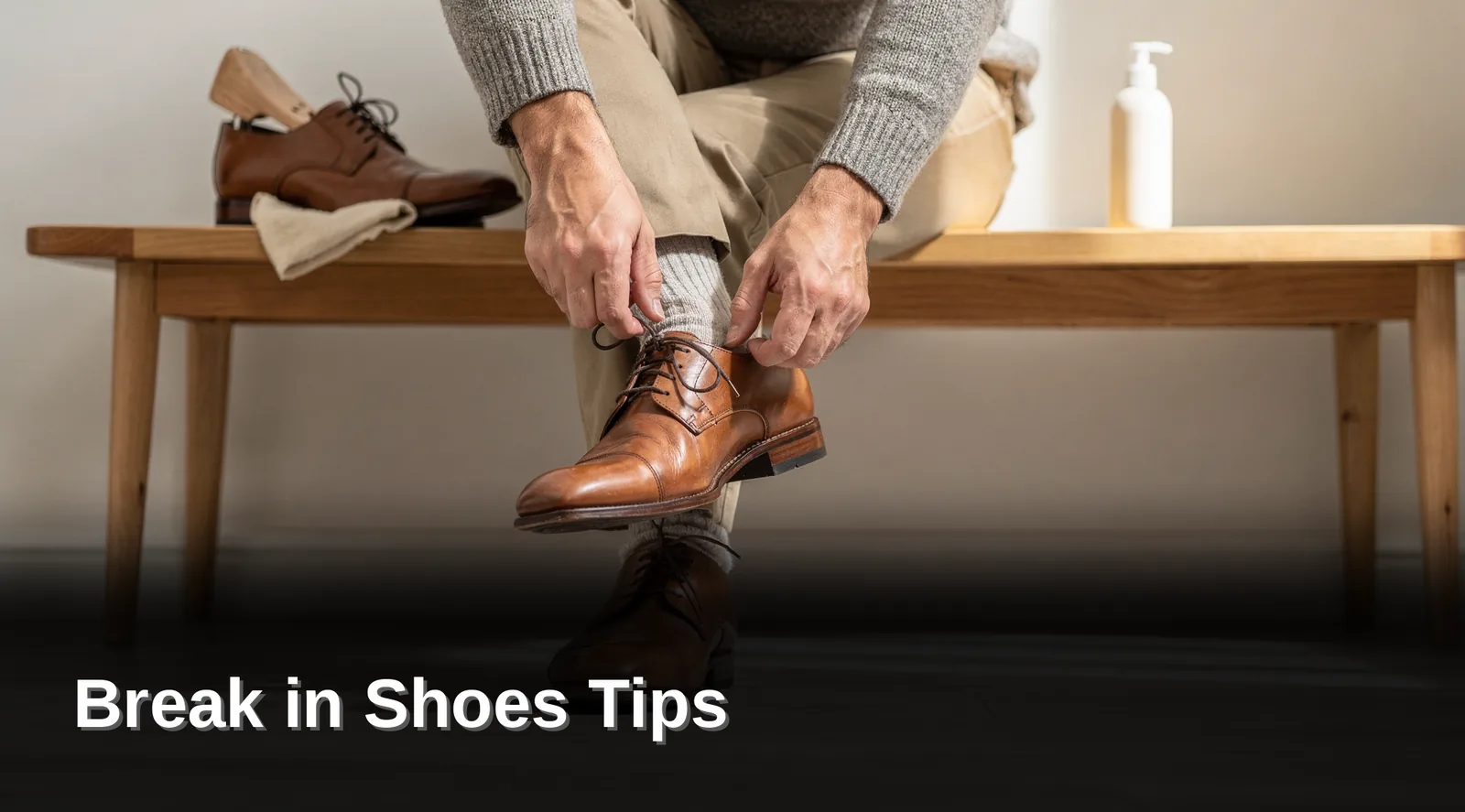
Do new shoes need breaking in?
Some do, some barely do. It depends mostly on the material and how structured the shoe is.
- Smooth leather dress shoes like Oxfords and Derbys are the stiffest. They usually need the most time to soften at the flex point and heel.
- Suede and nubuck are softer from the start. The Matteo Tassel Loafer, in soft nubuck, is described as feeling "broken-in from the first step."
- Shoes with cushioned or sneaker-style soles flex easily. The Milano Suede Derby pairs a suede upper with a cushioned white cupsole.
- Soft driving loafers like the Ravello Suede Loafers are made to be flexible and light.
If you're buying shoes for an event, choose a softer material when you don't have two weeks to break them in.
Check the fit first: breaking in won't fix the wrong size
A shoe that's too short, too narrow or loose at the heel will still be wrong after weeks of wear. Check the fit before you start.
- Length: your toes shouldn't press against the front when you stand.
- Width: the shoe should feel snug across the widest part of your foot, not pinching.
- Heel: a little lift is normal in new stiff shoes, but your heel shouldn't slide out as you walk.
This matters even more with slip-ons. Without laces, a loafer stays on only if it fits closely, so start snug rather than loose.
VIA NOVA styles fit true to size. If you're between sizes or want more room across the foot, take the next size up. Try new shoes on a clean floor at home before wearing them outside: only unworn shoes in original condition can be exchanged within 30 days of delivery under the return and exchange policy.
How to break in shoes: a two-week plan
Short, gradual sessions let the leather warm up and soften without rubbing your skin raw. Use this plan as a guideline and slow down if you feel any hot spots.
| When | How long | Where | What to watch for |
|---|---|---|---|
| Days 1 to 2 | 20 to 30 minutes | Indoors, clean floor | Pressure at toes, heel or sides |
| Days 3 to 4 | About 1 hour | Indoors | Red spots after taking them off |
| Days 5 to 7 | About 2 hours, plus a short walk | Indoors and a short trip out | Hot spots on the heel |
| Week 2 | Half days | Office, errands | Comfort by late afternoon |
| After 2 weeks | Full days | Anywhere | Ready for events |
Stiffer leather shoes may need longer. Softer materials may be comfortable within days. Let your feet, not the calendar, decide when you move to the next step.

How to prevent blisters while breaking in shoes
Blisters come from friction on the same spot. Reduce the rubbing and protect sensitive areas early.
- Wear the right socks. Use the socks you'll actually wear with the shoes, so the fit you break in is the fit you'll get.
- Cover hot spots right away. At the first sign of redness or warmth, put a blister plaster or moleskin on that spot before your next session.
- Keep feet dry. Moisture increases friction. Change socks if your feet get sweaty.
- Stop early. Take the shoes off when you feel a hot spot. Pushing through turns a red spot into a blister.
- Don't go sockless during break-in. Bare feet rub more against stiff linings.
Once your loafers are broken in and you wear them without socks, give them a day off between wears so they can air out.
Want shoes that feel good sooner? Soft suede, nubuck and cushioned-sole styles need little or no breaking in.
How to break in different types of shoes
Oxfords and Derbys
Laces let you adjust the fit as the leather softens. Lace them snugly but not tight, and focus on flexing the shoe at the ball of the foot. The London Genuine Leather Oxford has a cushioned sole that helps from day one.
Loafers
Loafers rely on a close fit, so start snug rather than loose. The heel and the top edge of the opening usually need the most time. Short indoor sessions help the leather shape around your foot. See the Rapallo Penny Loafer for a classic example.
Chelsea boots
Chelsea boots feel tight over the instep at first, mostly when you pull them on. Use the pull tab, and give the elastic and leather a few sessions to relax. The Aosta Chelsea Boot has a cushioned footbed and runs up to US size 15.
Heels
Wear new heels at home on a rug or carpet, ideally in the evening when feet are slightly larger. Block heels like the Eva Mary Jane Pumps are easier to break in than thin stilettos because they're more stable.

How to break in shoes before a wedding or event
Buy event shoes at least three weeks ahead. That leaves time for delivery, a two-week break-in and a size exchange if the first pair doesn't fit.
- Week 1: try them on at home the day they arrive. If the size is wrong, start an exchange right away while they're still unworn.
- Weeks 1 to 2: follow the indoor plan above, wearing the socks or tights you'll wear on the day.
- A few days before: wear them out for a few hours, ideally including some time standing.
- On the day: pack blister plasters in a pocket or bag, just in case.
What not to do when breaking in shoes
- Don't use a hairdryer or direct heat. Heat dries out leather and can crack it.
- Don't soak your shoes. Wet leather can lose its shape. If your shoes get wet, let them dry naturally at room temperature.
- Don't debut new shoes at a big event. A wedding or a long workday is the worst time to find a pressure point.
- Don't force a stretch at home. If one spot stays tight after two weeks, take the shoes to a cobbler, who can stretch them properly.
When to stop and get help
Mild stiffness that eases with each wear is normal. Sharp pain, numbness, or pain that gets worse rather than better is not. Take the shoes off and ask a cobbler about stretching, or check with a podiatrist if foot pain continues without the shoes.
Care during the break-in period
- Wipe after each wear with a soft, dry cloth.
- Use shoe trees between wears to help shoes keep their shape.
- Condition smooth leather every few months with a colorless leather balm.
- Store away from heat, in the box or dust bag.
Break-in questions
How long does it take to break in shoes?
It depends on the material. Stiff leather dress shoes often take around two weeks of gradual wear. Suede, nubuck and cushioned-sole shoes can feel comfortable within a few days.
Should new shoes hurt?
New shoes can feel stiff, but they shouldn't cause sharp pain. If they hurt badly from the first minute, they're probably the wrong size or shape.
Do suede shoes need breaking in?
Usually very little. Suede is soft and flexible, so a few short sessions at home are often enough.
Can I return shoes after breaking them in?
Usually not. Exchanges and store credit apply to unworn shoes in original condition, so check the fit indoors on a clean floor before wearing them out.
Comfortable shoes start before day one
The secret to pain-free shoes is patience: the right size, short sessions at home and a little protection for hot spots. Give a new pair two weeks and it will reward you for years.
Short on time? Choose soft suede or a cushioned sole that feels good from the first wear.